Amethyst Meaning: The Calm Stone, and How to Use It
The one most people own, and the one they reach for when their head will not switch off.
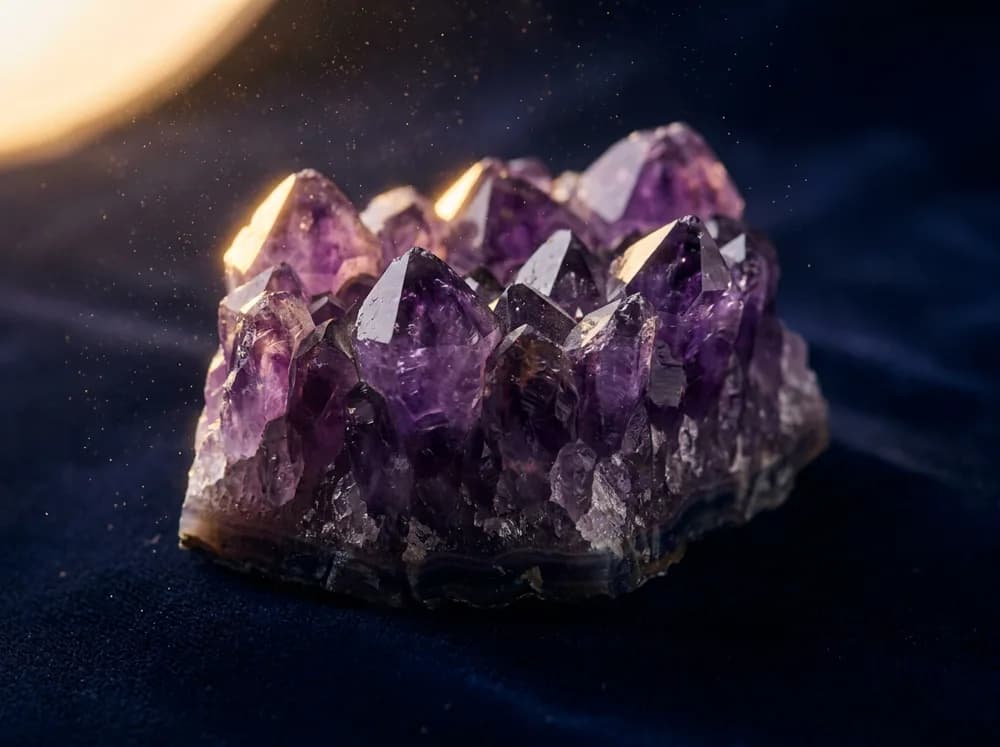
If you own one crystal, it is probably this one. Amethyst is the calm stone, the one people reach for when their head will not switch off, and it has been doing that job for about three thousand years.
At a glance
- Family
- Quartz, the same mineral as rose quartz and citrine
- Colour
- Pale lilac to deep violet
- Hardness
- 7 out of 10, tough and hard to damage
- Water
- Safe. A quick rinse will not hurt it
- Sunlight
- Fades it. Keep it off bright windowsills
- Mined in
- Uruguay, Brazil, Zambia
- Traditionally for
- Calm, clarity, sleep, intuition
What amethyst means
Calm, clarity, and a quieter mind. The name comes from the Greek word amethystos, which means not intoxicated. Greeks and Romans believed the stone kept you sober, and carved wine cups out of it to prove the point. Purple was the colour of royalty, so it ended up in crowns, and later in bishops' rings.
Three thousand years later we ask it for roughly the same thing, a clear head. Modern practice links it to the crown and third-eye chakras, and to rest.
When to reach for it
- Your mind is racing at eleven at night and you want something to hold.
- You are about to have a conversation you have been putting off.
- You want to start meditating and keep forgetting to.
- You need to think clearly about a decision instead of spinning on it.
How people use it
- On the bedside table. This is the most common use by far.
- In a pocket or bag, so your hand finds it during a hard day.
- In your hand while you meditate, as something to come back to when your attention wanders.
- On a desk, in view, as a reminder of a decision you made when you were calm.
Where it comes from
The famous amethyst geodes, the hollow purple caves you see in photos, some over five metres tall, come from northern Uruguay and just across the border in southern Brazil. They grew inside bubbles left in ancient lava flows that erupted around 134 million years ago, when South America and Africa were tearing apart. Water seeped in over an unimaginably long time, and crystals grew in the dark. That area has been mined for over 150 years. Zambia produces beautiful deep purple too.
Looking after it
- Water: fine. It is hard and does not dissolve.
- Sunlight: this is the one that matters. UV light fades the purple permanently over a few months. A sunny windowsill is the fastest way to ruin an amethyst.
- Knocks: it is hard, but the points chip. Keep it apart from your keys.
Is it real?
- Real amethyst usually has uneven colour, patches of lighter and darker purple. Perfectly even colour is a warning sign.
- It feels cold when you pick it up, and stays cold for a moment.
- It will scratch glass. Glass will not scratch it.
- Tiny round bubbles inside mean glass, not crystal.
Frequently asked
What does amethyst mean?
Amethyst is the stone of calm, clarity and a quieter mind. Its name comes from the Greek amethystos, meaning not intoxicated, because Greeks and Romans believed it kept you sober and carved wine cups from it. Today it is linked to rest, intuition, and the crown and third-eye chakras. These are traditional associations, not medical effects.
Can amethyst go in water?
Yes. Amethyst is a 7 out of 10 for hardness and does not dissolve, so rinsing it is fine. Sunlight is the real danger, because UV light fades the purple permanently over a few months. Keep it off bright windowsills.
Where does amethyst come from?
Mostly Uruguay and southern Brazil, where giant geodes grew inside bubbles in lava flows around 134 million years ago. Some are over five metres tall. Zambia is another major source, and Uruguayan amethyst is prized for the deepest purple.
How do I know if my amethyst is real?
Real amethyst has uneven colour, feels cold to the touch, and scratches glass. Warning signs are perfectly even colour, tiny round bubbles inside, a stone that warms instantly in your hand, and a price that seems too good.
Keep reading
Crystal Meanings: A Simple, Honest Guide to 12 Stones
What each stone means, when to reach for it, and how to look after it. Start here.
Which Crystals Cannot Go in Water? The Simple Rule
The rule is easier than the long lists suggest: if a stone is soft, keep it dry.
Rose Quartz Meaning: The Love Stone, and What It's Really For
Everyone calls it the love stone. The older meaning is gentler, and it is not about romance.