Citrine Meaning: The Abundance Stone (and Why Yours Was Purple)
The open secret of the crystal shops: your citrine was probably purple when it came out of the ground.
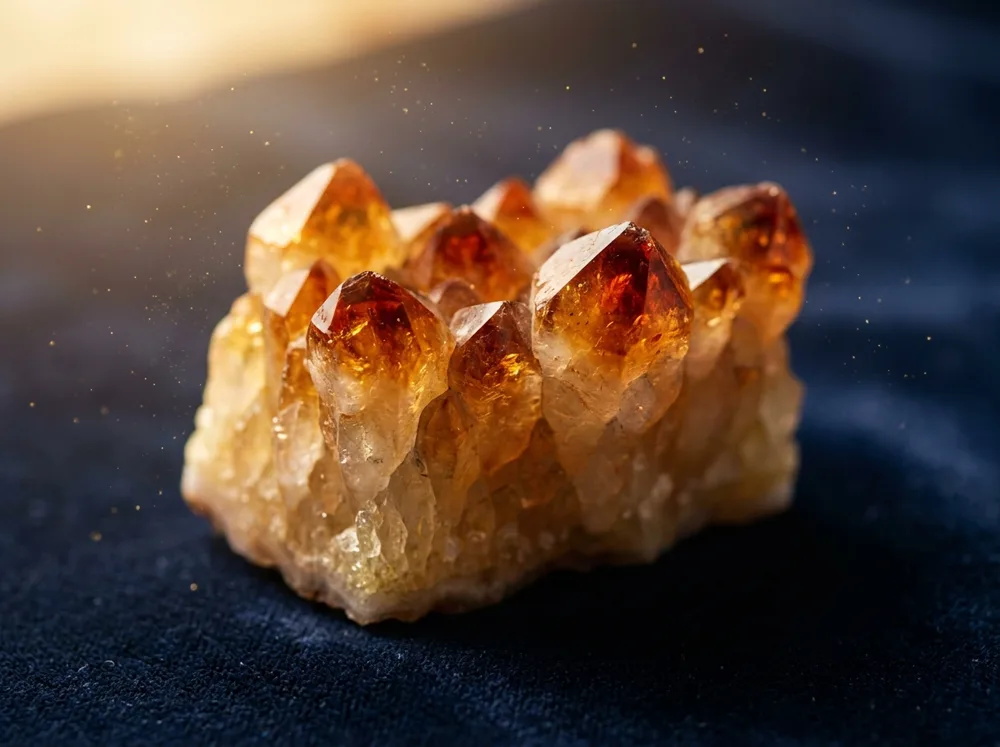
Citrine is the sunny one, the stone people keep in the till, the money drawer, the handbag. It is also the stone with the biggest open secret in the shop, and almost nobody puts it on the label.
At a glance
- Family
- Quartz, the same mineral as amethyst
- Colour
- Pale lemon to deep burnt orange
- Hardness
- 7 out of 10, tough
- Water
- Safe
- Sunlight
- Fades it. Keep it off the windowsill
- Mined in
- Brazil, Madagascar, Spain, Bolivia
- Traditionally for
- Abundance, confidence, optimism
What citrine means
Abundance, optimism, confidence. It is the merchant's stone, traditionally kept where money changes hands, and it is linked to the solar plexus, the part of you that either backs itself or does not.
The association is not hard to trace. It is gold-coloured and it looks like sunlight, and people have been connecting gold and daylight with good fortune for as long as there have been people.
When to reach for it
- You are starting something and need to back yourself out loud.
- You are asking for a raise, pricing your work, or sending the invoice you have been sitting on.
- Your confidence has taken a knock and you want a reminder on the desk.
- You want something sunny in the house in a grey month.
How people use it
- On a desk, or wherever you do the work that pays you.
- In the till, the drawer, or the purse, its oldest and most literal use.
- Held while you say the number out loud before you say it to a client.
- Somewhere you will see it in the morning.
Where it comes from
Natural citrine is genuinely uncommon, and comes in modest amounts from Brazil, Madagascar and Spain. The one to know about is the Anahi mine in Bolivia, which produces ametrine, a single crystal that is purple at one end and gold at the other, where the earth did the heating unevenly and made half of it citrine by accident. It is the perfect proof that these are the same stone.
Looking after it
- Water: fine.
- Sunlight: fades it, treated or natural, which is ironic for the sun stone. Keep it off the windowsill.
- Knocks: chips at the points.
| Heat-treated (most of the market) | Natural (uncommon) | |
|---|---|---|
| Colour | Strong orange to reddish-brown | Pale smoky lemon to soft honey |
| Base of the stone | Often whitish | Even colour throughout |
| Where the colour sits | Concentrated at the tips | Evenly distributed |
| Usual form | Clusters and geodes | Single points |
| Was it amethyst? | Yes, heated until it turned gold | No |
| Price for the size | Low | Higher |
| Is it real quartz? | Yes, genuinely | Yes |
Is it real?
- Heat-treated: strong orange or reddish-brown, often with a whitish base, with the colour concentrated at the tips. Sold as clusters and geodes that look exactly like amethyst geodes, because that is what they were.
- Natural: pale, subtle, smoky lemon to soft honey. Rarely dramatic. Usually a single point rather than a cluster.
- Rule of thumb: if a big, vividly orange citrine cathedral is cheap, it was purple last year.
Frequently asked
Is most citrine heat-treated amethyst?
Yes. The large majority of citrine sold today is heat-treated amethyst, because heating purple quartz to a few hundred degrees turns it gold. It is the same mineral throughout, so it is not fake, but it should be disclosed and it should not carry a rare-stone price.
How can I tell natural citrine from heat-treated?
Heat-treated citrine is strongly orange or reddish-brown with a whitish base and colour concentrated at the tips, and comes as clusters and geodes shaped exactly like amethyst geodes. Natural citrine is pale, smoky lemon to soft honey, rarely dramatic, and usually a single point.
What does citrine mean?
Citrine is the stone of abundance, optimism and confidence, the merchant's stone traditionally kept where money changes hands, and linked to the solar plexus. These are traditional associations rooted in its gold colour. No stone affects your finances.
What is ametrine?
Ametrine is one crystal that is amethyst at one end and citrine at the other, formed where the earth heated part of the stone and not the rest. It comes mainly from the Anahi mine in Bolivia, and it proves that amethyst and citrine are the same mineral.
Keep reading
Crystal Meanings: A Simple, Honest Guide to 12 Stones
What each stone means, when to reach for it, and how to look after it. Start here.
Which Crystals Cannot Go in Water? The Simple Rule
The rule is easier than the long lists suggest: if a stone is soft, keep it dry.
Amethyst Meaning: The Calm Stone, and How to Use It
The one most people own, and the one they reach for when their head will not switch off.