Pyrite Meaning: Fool's gold, and How to Use It
Fool's gold. Reach for it to back yourself.
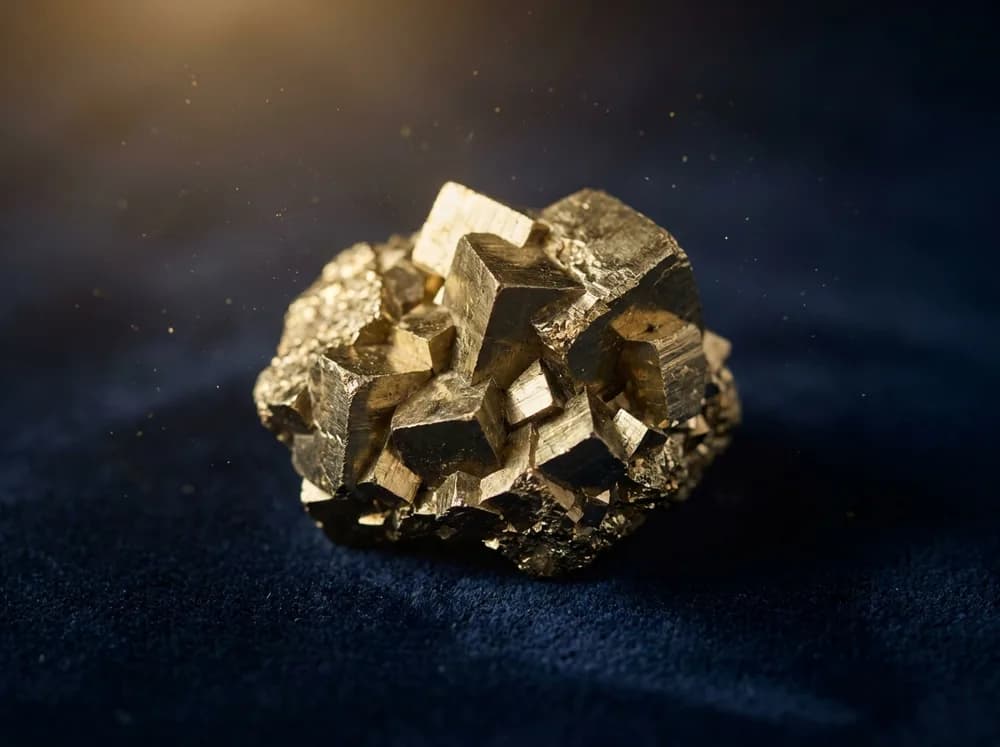
Pyrite is known in the tradition as fool's gold. If you want the short answer: reach for it to back yourself.
At a glance
- Colour
- Brassy metallic gold, cubic
- Hardness
- 6 to 6.5 out of 10 — but it oxidises
- Water
- No. It rusts and can weep acid.
- Sunlight
- Safe.
- Mined in
- Spain, Peru, Italy, Illinois
- Chakra
- Solar plexus
- Element
- Earth and Fire
- Planet
- Mars
- Zodiac
- Leo, Aries
What pyrite is said to help with
These are the associations the tradition gives it. They are long-standing beliefs rather than proven effects, and they are recorded here because they are genuinely what people come looking for.
- Confidence and personal power
- Abundance — it looks like gold, and the association followed
- Protection, especially from your own self-doubt
- Willpower and follow-through
The part that is actually true
Pyrite forms natural cubes so perfect they look machined, because of how its atoms stack. Its name is from the Greek for fire — strike it and it sparks, which is how it lit fires and fired early flintlock guns.
Where pyrite comes from
Spain, Peru, Italy, Illinois.
Looking after it
- Water: No. It rusts and can weep acid.
- Sunlight: Safe.
Frequently asked
What does pyrite mean?
Pyrite is known as fool's gold. The tradition associates it with confidence and personal power, abundance, protection. These are traditional associations rather than demonstrated effects, and no stone treats an illness.
Can pyrite go in water?
No. No. It rusts and can weep acid.
What chakra is pyrite?
The tradition associates pyrite with the solar plexus chakra, the earth and fire element, and Mars. These are traditional correspondences rather than measurable properties.
Where does pyrite come from?
Spain, Peru, Italy, Illinois.
Keep reading
Crystal Meanings: A Simple, Honest Guide to 12 Stones
What each stone means, when to reach for it, and how to look after it. Start here.
Which Crystals Cannot Go in Water? The Simple Rule
The rule is easier than the long lists suggest: if a stone is soft, keep it dry.
Amethyst Meaning: The Calm Stone, and How to Use It
The one most people own, and the one they reach for when their head will not switch off.